
Asharasha!
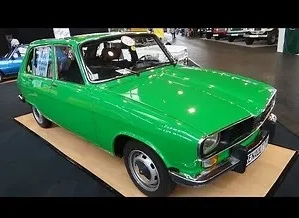
Peugeot, 2000
November 10, 2026
My husband David was a legendary traveller. He and Marjorie, who were married for almost fifty years, used to go on a month-long European holiday every year. He took the wheel, by mutual agreement, and drove them around southern France and Italy.
I met David after Marjorie died in 2010, and I was baffled when he talked about their travels. They hadn’t rented a car, he said, and then he’d mention asharasha.
This was a word I’d never come across, but the word asharasha tripped off David’s tongue as though it were not only as exotic but every bit as comprehensible as other foreign words, like maharajah, say, or Zeitgeist. He just loved the sound of it.
Smarter people than I would have known what he meant by asharasha—you yourself might know the term—but I had no idea what he was talking about.
He knew exactly what he meant and, in his characteristically modest way, assumed his listeners would know at least as much as he did.
A bolder person than I might have asked him what asharasha meant, but I was too embarrassed to do that, especially after I’d heard it several times and said nothing. I didn’t even understand enough to figure out how to frame a coherent question about it. Was it a person? a region? or a wayward wind, like the Föhn?
And I did keep hearing about asharasha, for David was proud of his European adventures and loved telling his stories. I never heard any of his listeners ask what he was talking about. Perhaps they knew the term. Either that, or they were just as baffled as I was.
It never occurred to me that this might be French. David was born in Toronto and had studied French for years, but he was never at ease in the language, even after decades living in Montreal and travelling in France.
I sympathize. I’ve known what it’s like to struggle with every language I’ve ever needed. Languages are hard. It takes years to figure out that Cholmondeley is pronounced Chumly and Niamh as neev.
And David was always so confident when he was telling his asharasha stories. This was proof positive it couldn’t be a French word, for he was hesitant whenever circumstances compelled him to say anything in French.
This must be why it took me so long to figure out that there is, or there should be, a hyphen in asharasha. I might have had a better chance of understanding what David was saying if I’d heard a hyphen—a one-second pause between asha and rasha. That would have meant there were two words, and that might have tipped me off.
But there was no pause at all, when David said “asharasha.”
Whatever it meant, asharasha seemed to be just one word.
I still didn’t know there should also be a “t” after asha, and another “t” after rasha. But there’s a good reason why I couldn’t hear the letter “t.”
What David meant by asharasha, I eventually discovered, was a program that allowed him to buy a brand-new car from a French automobile dealer—Renault, say, or Peugeot—on arrival in Nice, and to pay far less for this shiny new vehicle than he would have had to pay for a rental. He could drive Marjorie around Europe for gleeful weeks, get the car serviced free of charge en route, and then, at the end of their vacation, sell the car back to the dealer at a price that was satisfyingly close to what he had paid.
When he referred to asharasha, David was talking about a French automobile marketing strategy known as le formule achat-rachat. A “buy / buy-back” deal.
In other words, David’s asharasha only sounded like one word. It consists, in fact, of two different words. The first is achat—a purchase—which in this case refers to David’s purchase of the car on arrival in Nice.
The second word is rachat—a buy-back, or repurchase—which is the automobile dealer’s subsequent repurchase from David of that very same car.
The difference in price between a new car and a briefly used but still-new car—and applicable French sales taxes—may have something to do with the viability of this formule. For me, though*,* being more interested in language than in car sales and taxes,it was the hyphen that provided me with the key to understanding what asharasha means. The hyphen goes between achat and rachat, both of which are indeed French words, even if they’d always sounded like a single word in a language I’d never learned.
There’s a “t” at the end of each word, too. I might have guessed that, once I knew there was a hyphen. And once I realized it really was French.
David was right not to pronounce the letter “t”. He’d never been at ease in French, and he might not have paused for the hyphen in achat-rachat, but as a Montrealer, he knew the “t” is silent at the end of achat and rachat.
Voilà !
Asharasha !
N.B. Like most of my other posts, this one also appears on my Substack, lindaleithTHELOT