
The 2026 Cundill History Prize: A gala occasion, with one source of embarrassment
November 3, 2026
Having been invited to these occasions when I was heading up the Blue Metropolis Montreal International Literary Festival, I’ve enjoyed Cundill Prize dinners and cocktails in various formats and venues over the years, on-campus and off.
On one early occasion I sat next to Lisa Jardine, CBE, the author of the winning book, Going Dutch: How England Plundered Holland’s Glory, and she just happened to be the sister of a schoolmate of mine in London. Jardine was back as a juror the following year, along with New Yorker writer Adam Gopnik. He came with his son, who spent the evening practising magic.
This year’s 5-à-7 was both elegant and inspiring. It was also a reminder of the power of wealth, in case any of us were in any doubt on that score. With a $75,000 USD purse for the winning book, $10,000 USD each for the other two shortlisted books, and McGill in charge of proceedings, the prize was created by F. Peter Cundill (1938-2011), a Montrealer who flunked out of history at McGill and went on to make his fortune as a global investor. Evidently well-heeled, the Foundation created after his death foots a substantial annual bill for the world’s richest non-fiction prize, which is given to the author of a history book “that embodies historical scholarship, originality, literary quality and broad appeal.”
After introductory speeches by McGill President and Vice-Chancellor Deep Saini, the Dean of Arts, and a Cundill Foundation board member, event host—and CBC Ideas host—Nahlah Ayed introduced the three shortlisted books, each of which featured in a short video presentation that included comments from the four jurors and a terrific short, live on-stage interview between a well-prepared Ayed and each of the authors, all of whom were present.
2026 Jury chair, and Harvard professor, Emily Greenwood said:
This year’s three finalists have written vivid historical accounts of complex subjects, and all three books have strong resonance and staying power.
Adding detailed commends on the three finalists, she added:
Jonathan Cheng’s Korean Messiah brings together strands of North Korea’s history that are typically kept separate, showing how Kim Il Sung’s idiosyncratic borrowings from the evangelical Christianity of his youth have been a crucial element of the mythmaking of the three-generation political Kim dynasty.
And:
John Doe Chinaman and The First Ghetto analyse conditional inclusion as a form of social control—of the Chinese in the American West and the Jews in Venice—in all its cruel unpredictability.
Alexander Lee’s *The First Ghetto *foregrounds the stories of the Ghetto’s Jewish inhabitants, enabling readers to understand the significance of the Venice Ghetto as both a flourishing Jewish stronghold and a vulnerable enclosure over a five-hundred-year history.
And the winner of this year’s Cundill Prize is:
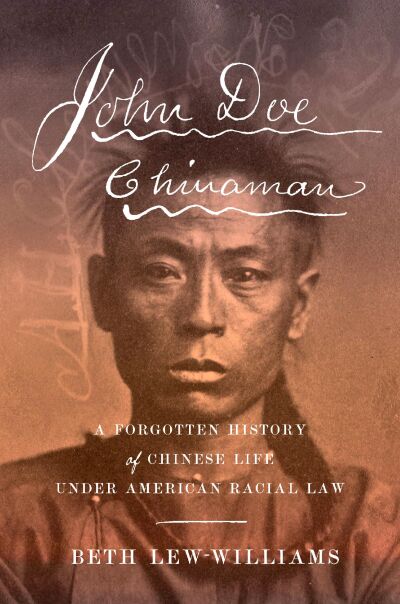
John Doe Chinaman: A Forgotten History of Chinese Life Under American Racial Law (Harvard UP, 2025), by Beth Lew-Williams.
This is a book which Greenwood adds, “analyses the panoply of Anti-Chinese laws that states and municipalities used to control and intimidate Chinese migrants in the American West and reconstructs the lives that the Chinese lived under and despite these laws.”
Prize-winning author Beth Lew-Williams is professor in the Department of History at Princeton and director of the Effron Center’s Program in Asian American Studies. She prefaced her acceptance speech with a moving tribute to her grandfather, whom she interviewed on his deathbed—when she was 11 years old and working on a school project—and whose immigrant story inspired her interest in history.
Canadian journalist Jonathan Cheng’s Korean Messiah has already been the focus of an Ideas broadcast, and Ayed stressed the interest that Ideas shares with the prize.
The books, the authors, the jurors, and the event itself were all brilliant, in other words. There was a celebratory glass of wine after the formalities as well as memorably good snacks. Andreas Kessaris of Paragraphe Books expressed satisfaction with book sales.
The one source of embarrassment was the Cundill director introducing the Foundation to a room full of Montrealers and international writers, readers, and academics. Looking out across the room, he began by saying, “I don’t really have to do half of this in French, do I.” To the extent that this was a question, it was rhetorical, for he continued his remarks entirely in English, while the man in the seat behind me practically choked.